Why Does Fabric Matter When Buying Clothes?
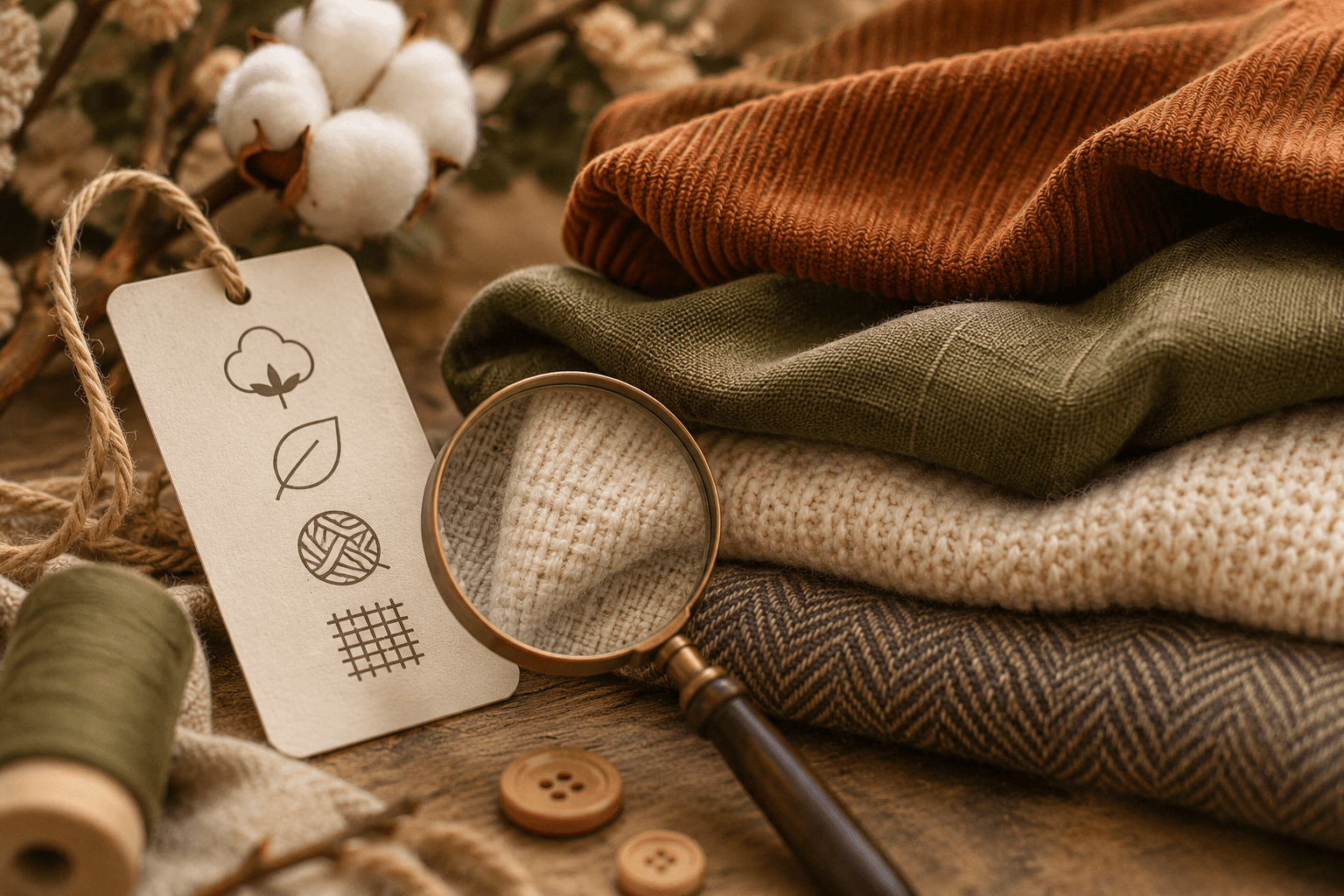
A shirt can look beautiful.
The color is exactly what we were looking for. The fit is flattering. The price seems reasonable.
But do we actually pick it up and read the label inside?
100% cotton. 55% linen, 45% viscose. 95% cotton, 5% elastane. 100% polyester.
These numbers tell us about one of the least visible yet most important characteristics of clothing: what it is made of.
The material can affect how a garment feels against our skin, how easily it wrinkles, how well it holds its shape, how it should be washed, what activities it is comfortable for, and how it changes over time.
But choosing a material is not as simple as saying:
“Cotton is good, polyester is bad.”
A more useful question is:
Where and how will I wear this garment, and is its material suitable for that purpose?
First, Let's Understand the Difference Between Fabric and Fiber
In everyday conversation, we often refer to cotton, polyester, and linen as fabrics.
Technically, these are primarily types of fibers.
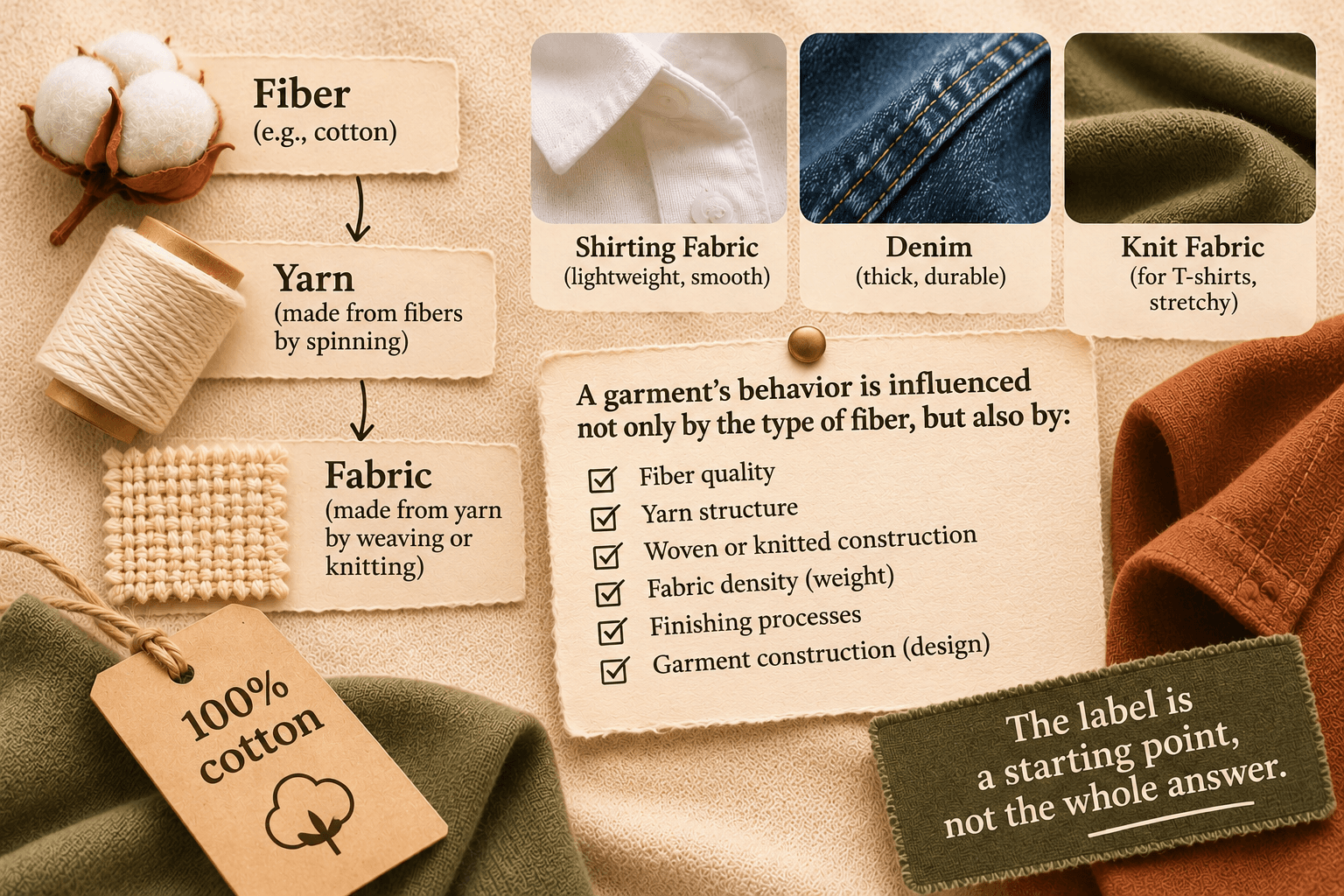
Fibers are used to make yarn, and yarn is used to create fabrics with different structures.
That is why two garments labeled:
100% cotton
will not necessarily feel the same.
Cotton can be used to make lightweight shirting fabric, thick denim, or knitted T-shirt material.
So the behavior of a garment depends not only on the fiber but also on:
- Fiber quality
- Yarn structure
- Woven or knitted construction
- Fabric density
- Finishing processes
- Garment construction
The label is a starting point, not the whole answer.
Why Does Material Matter So Much?
Because we do not just look at our clothes.
We live in them.
Material:
touches our skin, manages moisture, moves with our bodies, wrinkles or resists wrinkling, affects how warm we feel, and changes through washing, drying, and everyday wear.
For example, it would not make sense to expect the same qualities from a summer shirt and a running shirt.
For one, softness and comfort may be our priorities.
For the other, quick drying and elasticity may matter more.
Warmth is important in a winter sweater.
For travel clothing, wrinkle resistance and quick drying may be more valuable.
That is why choosing a material according to its intended use matters.
1. Cotton
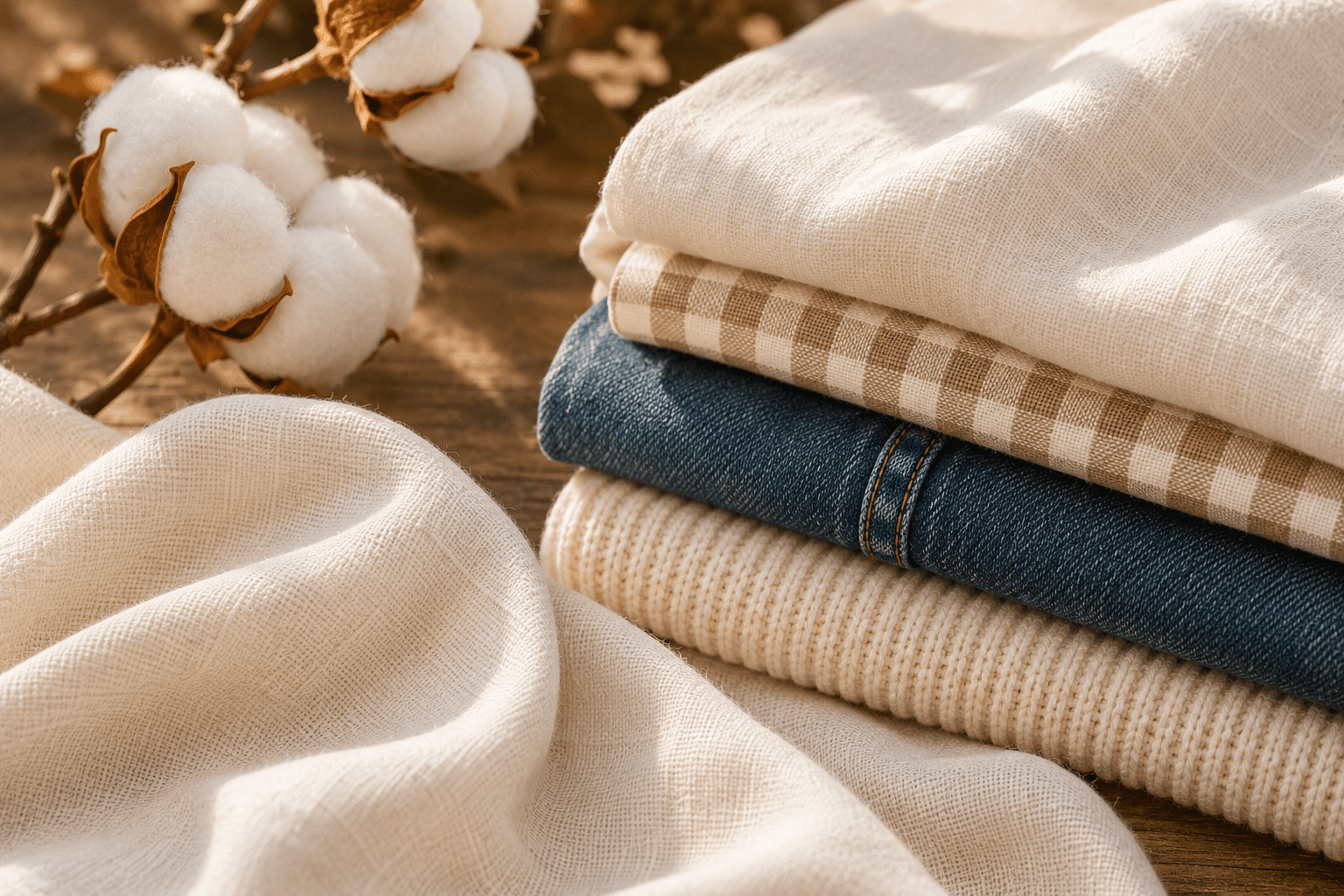
Cotton is a natural plant-based fiber and one of the most widely used materials in the clothing industry.
Why do people like it?
Cotton is generally:
- Pleasant against the skin
- Able to absorb moisture
- Comfortable for everyday clothing
- Available in many weights and fabric constructions
- Practical to care for in many forms
That is why we often find it in:
T-shirts, shirts, underwear, summer dresses, denim, and everyday clothing.
But...
A label saying “100% cotton” is not an automatic guarantee of quality.
Both inexpensive, poorly constructed cotton fabric and exceptionally high-quality cotton fabric may carry the same label.
Depending on its construction, cotton can wrinkle easily, change dimensions after washing, and dry more slowly than synthetic materials.
When would I choose it?
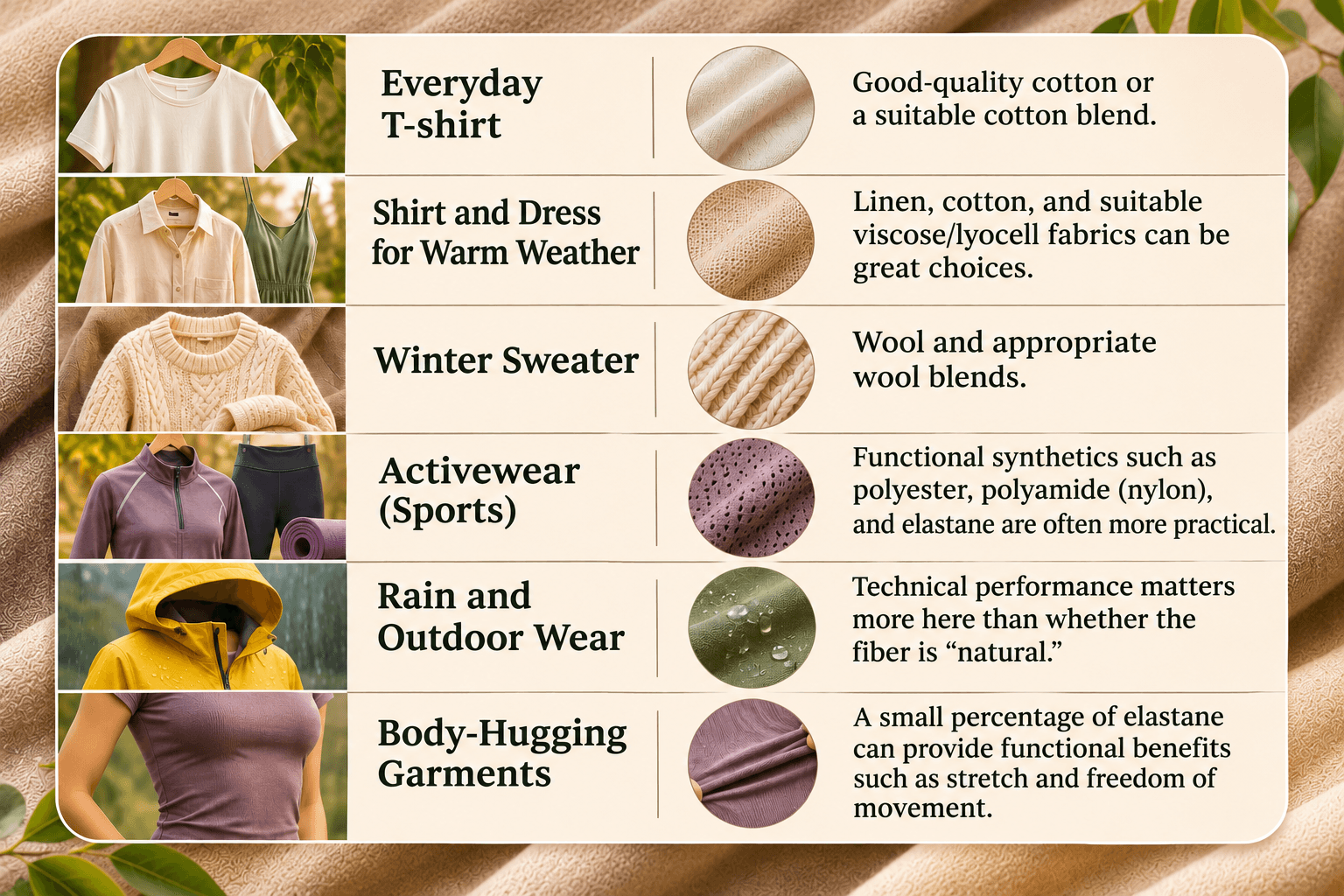
For everyday T-shirts, shirts, and comfortable garments that stay in contact with our skin for long periods, cotton is an excellent starting point.
But after reading the label, I would still examine the fabric itself.
2. Linen
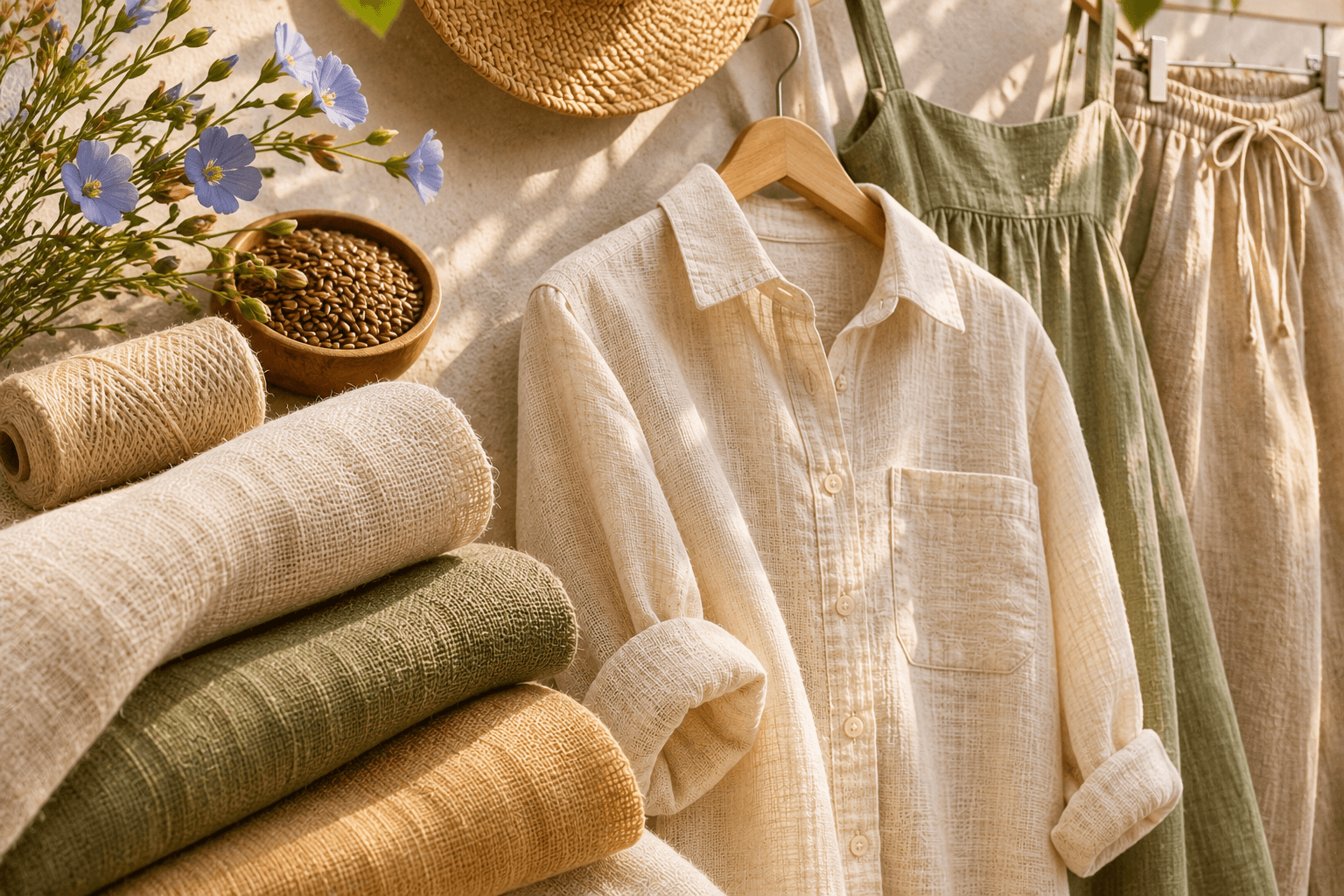
Linen is a natural fiber obtained from the flax plant.
It is particularly popular for summer clothing.
Why?
Linen fabrics can often be:
- Breathable
- Moisture-absorbing
- Comfortable in hot weather
- Strong and durable
Linen also has a distinctive texture.
And yes:
Linen wrinkles.
But that does not necessarily make it a flaw.
Wrinkling is part of linen's character and one of the reasons some people love it.
What is linen good for?
Summer shirts, trousers, dresses, shorts, and comfortable clothing for warm weather.
If you prefer a very polished, wrinkle-free appearance throughout the day, pure linen may not be the most practical choice.
Linen blends can offer a compromise.
3. Wool
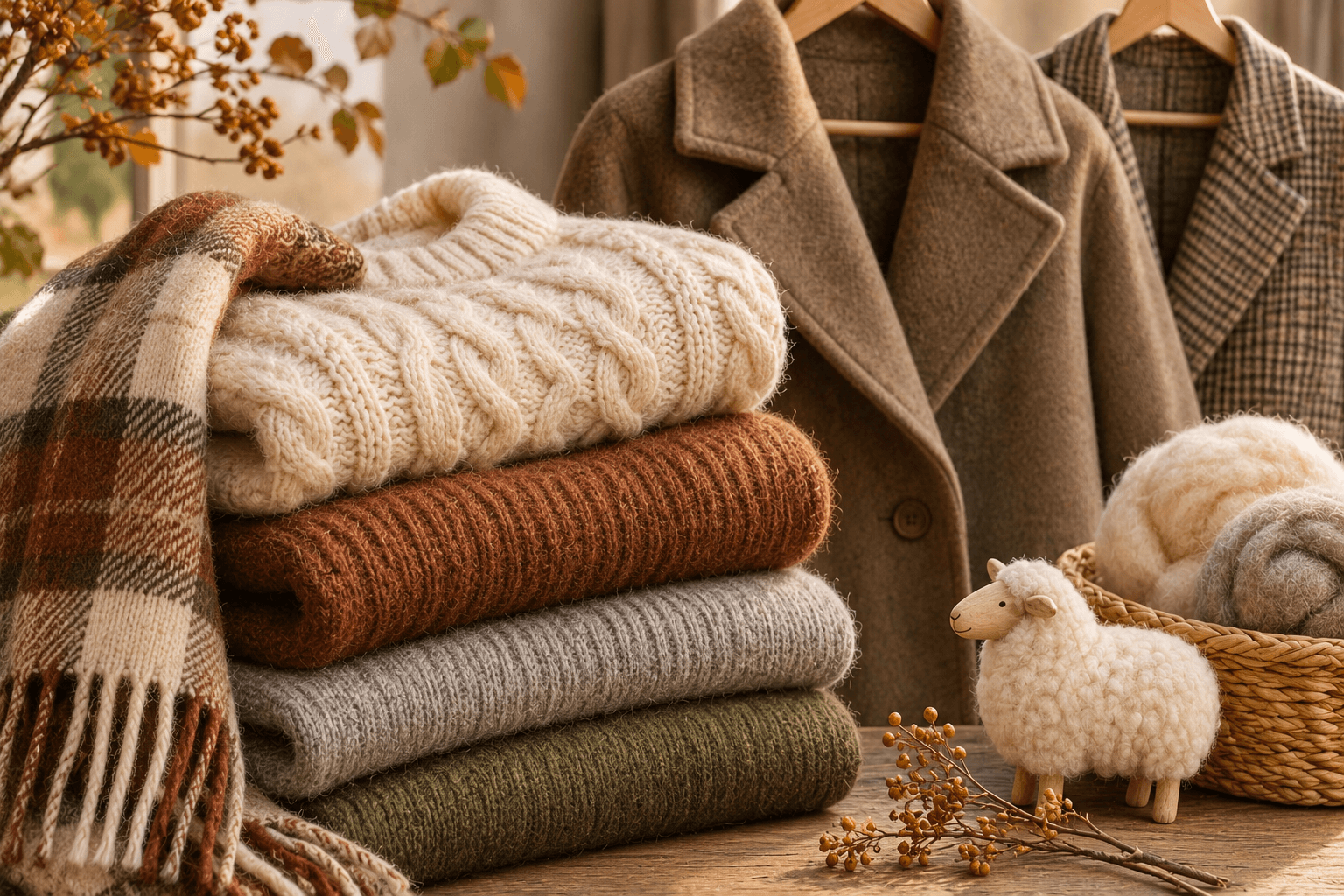
Wool is a natural animal-derived fiber, most commonly associated with sheep.
One of wool's greatest strengths is its ability to provide thermal insulation.
That is why it is widely used for:
- Sweaters
- Coats
- Suits
- Scarves
- Winter accessories
But not all wool is the same.
Fiber fineness, fabric construction, and processing can significantly affect whether wool feels soft or itchy against the skin.
This is why finer wool varieties, such as merino, may feel different.
What should we pay attention to?
Care requirements.
Some wool garments require special washing methods or professional cleaning.
So when we find a beautiful wool sweater, we should ask ourselves another question:
Am I willing to care for this garment the way it requires?
4. Silk
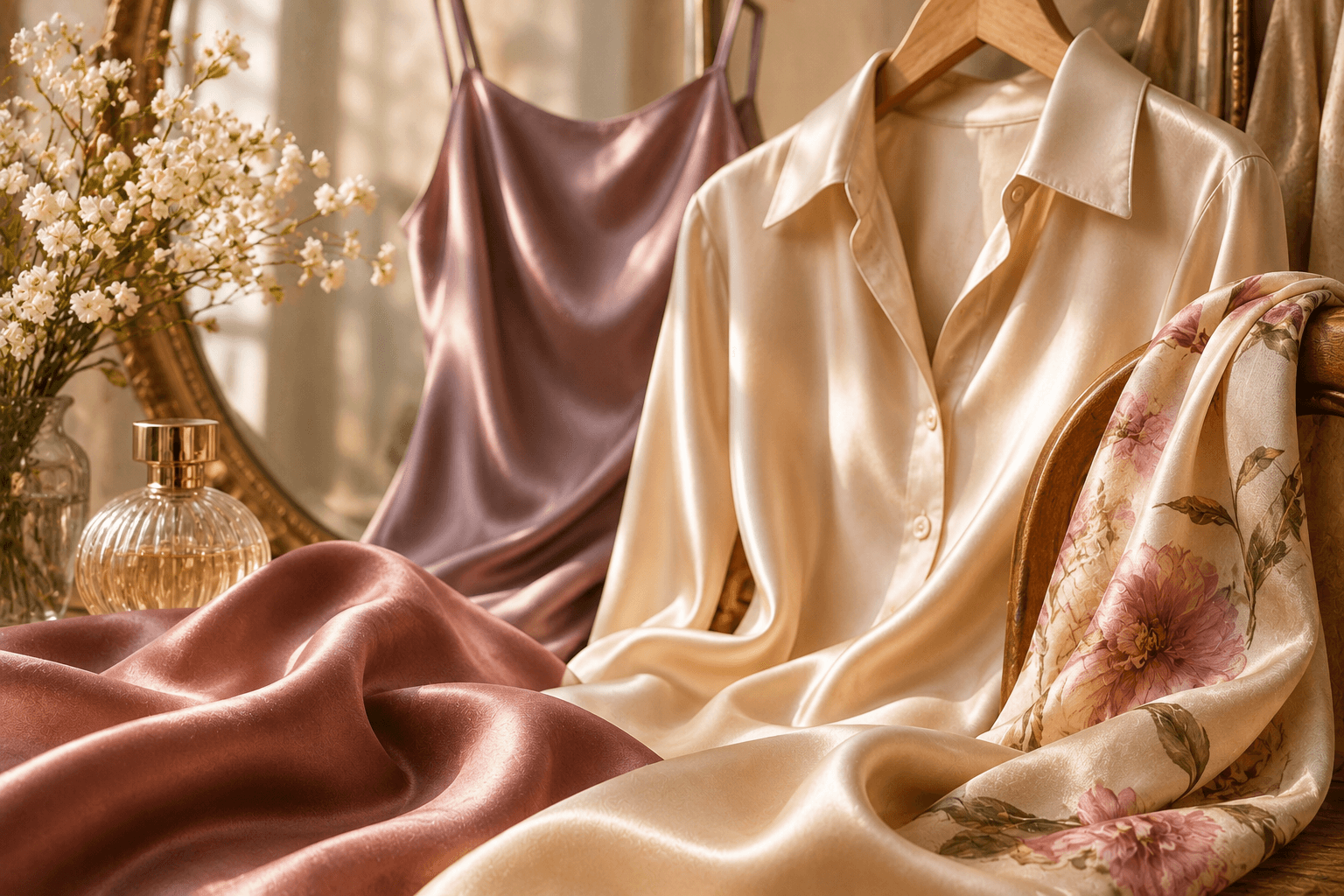
Silk is a natural protein fiber.
It is known for its lightness, smooth surface, and distinctive sheen.
It is used in dresses, blouses, scarves, and delicate garments.
However, silk can often be:
- More expensive
- More demanding to care for
- More sensitive to abrasion and certain stains
So once again, the idea that “silk is natural, therefore we should buy it” is not necessarily correct.
No matter how beautiful a material is, it may not be a good choice if it does not suit our daily lives and ends up sitting unused in the wardrobe.
5. Viscose — Natural or Synthetic?
This is where things become a little more interesting.
Viscose often causes confusion.
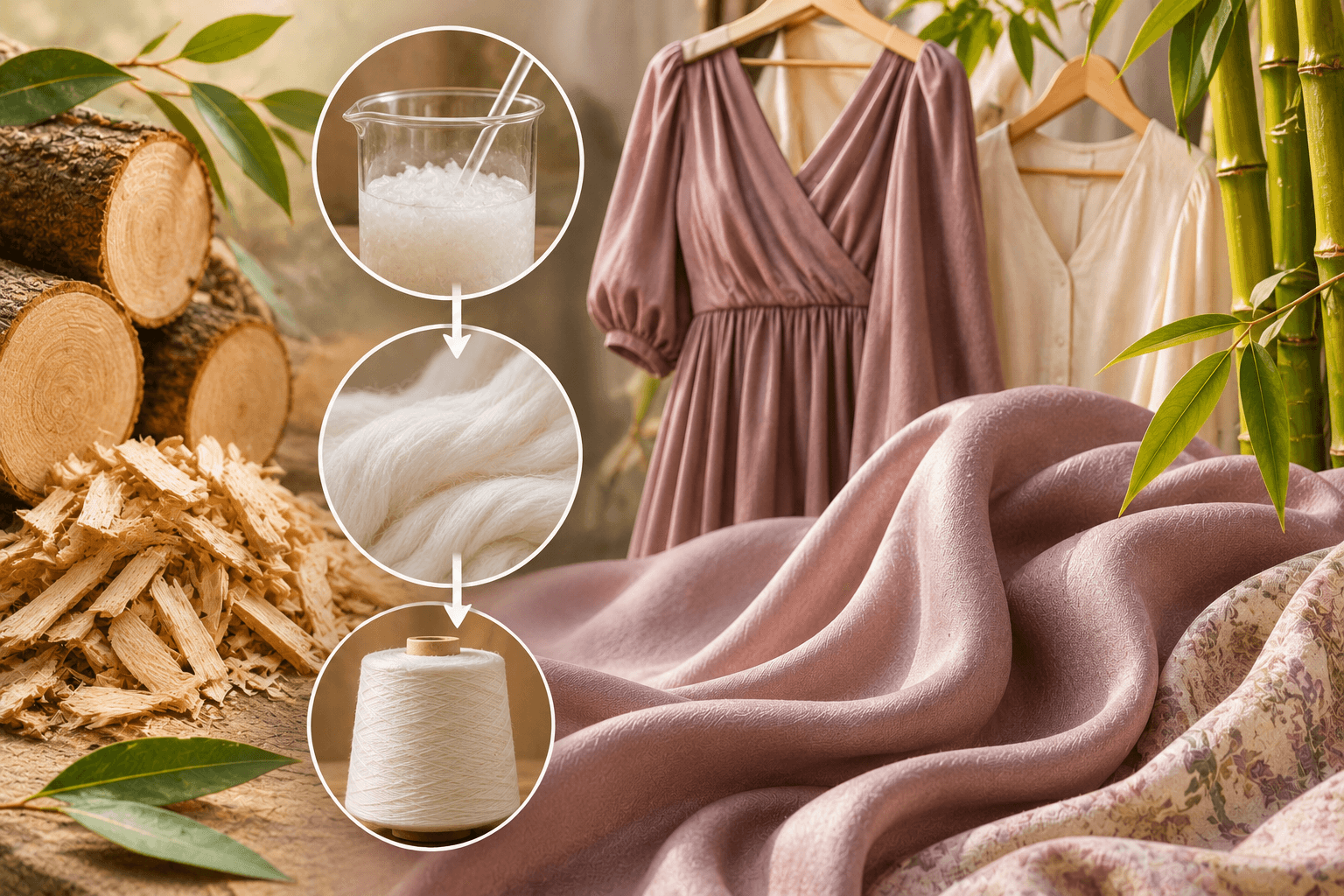
Its raw material can be plant-derived cellulose, commonly obtained from wood pulp. However, the fiber does not exist in nature in its finished form. The cellulose is dissolved through chemical processing and regenerated into fibers.
That is why viscose is classified as a regenerated, man-made cellulosic fiber.
In clothing, viscose often creates fabrics that are:
- Soft
- Fluid
- Beautifully draping
- Comfortable against the skin
That is why we frequently see it in dresses, blouses, and skirts.
What about “bamboo” clothing?
This is where reading the label becomes especially important.
Many soft garments marketed as “bamboo” are not made directly from natural bamboo fibers.
Instead, bamboo cellulose is processed into rayon or viscose.
Under U.S. FTC rules, products that are not made from genuine bamboo fiber should not simply be labeled “bamboo.” They should be accurately described using terms such as “rayon made from bamboo” or “viscose made from bamboo.”
That is why marketing claims such as “It's bamboo, so it must automatically be eco-friendly and antibacterial” should be treated with caution.
6. Lyocell
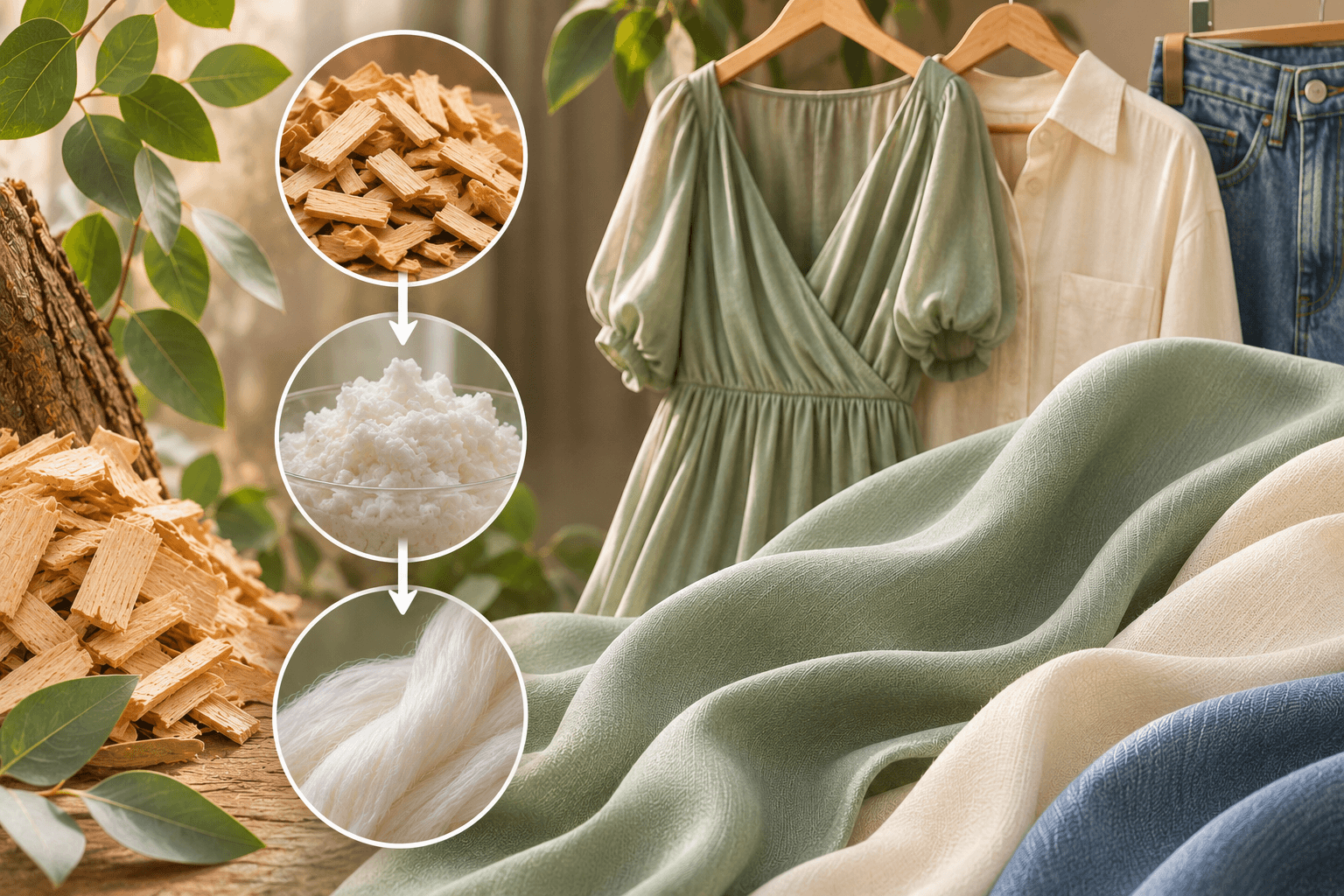
Lyocell is another man-made, cellulose-based fiber.
It is often used to create materials that are:
- Soft
- Fluid
- Smooth
- Comfortable in terms of moisture management
We may encounter it in dresses, shirts, trousers, and denim blends.
However, we should not assume that every product labeled “lyocell” has automatically been manufactured in an environmentally sustainable way.
The source of the raw material and the production process also matter.
The main principle of this article applies here too:
The fiber name does not tell the whole story.
7. Polyester
Now we come to one of the most debated materials.
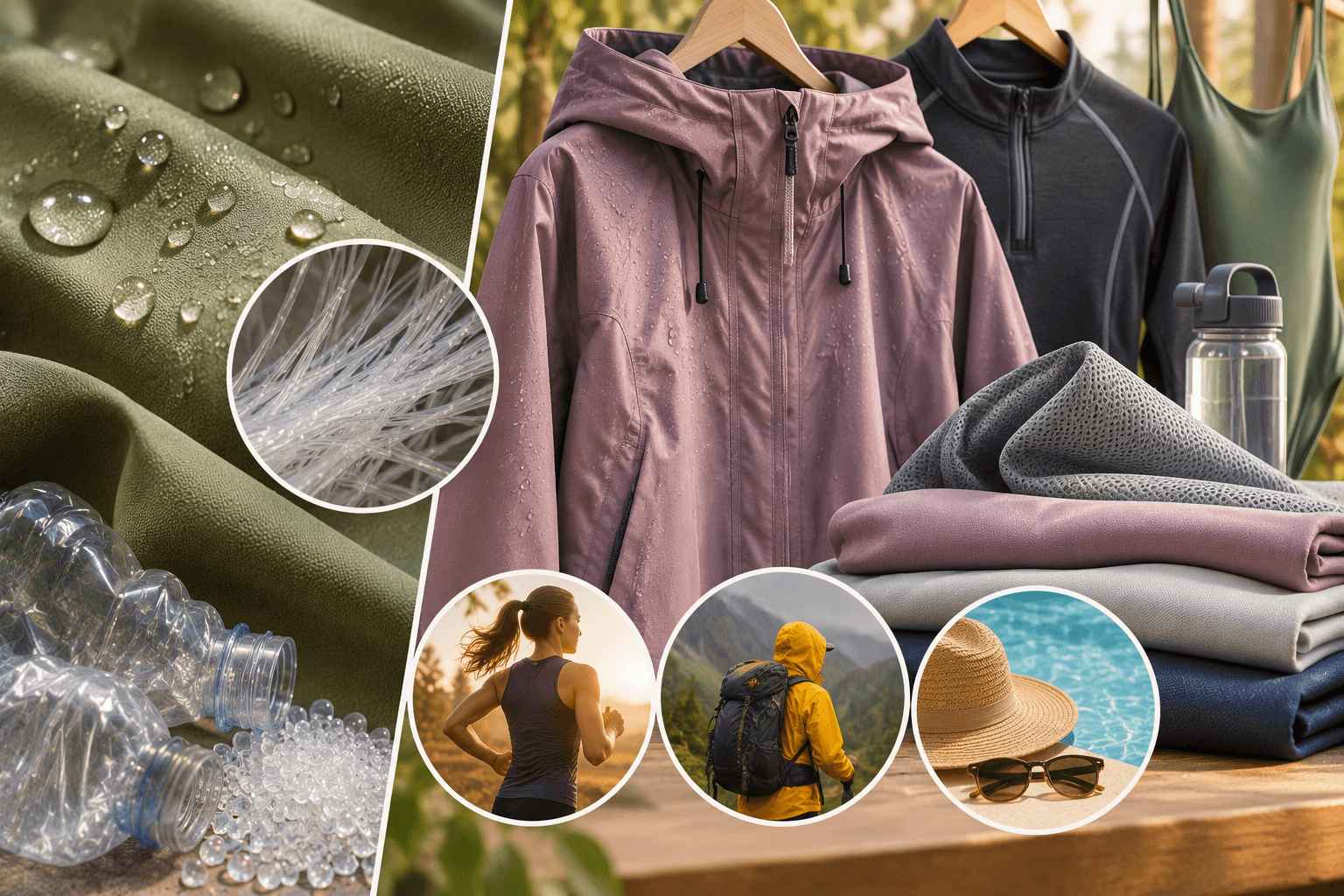
Polyester is a synthetic fiber, typically produced using fossil-based raw materials such as petroleum.
Synthetic textile production uses non-renewable resources, and the use and washing of synthetic textiles can release microplastic fibers into the environment.
Does that mean we should avoid all polyester clothing?
No.
Polyester also has useful properties.
It is generally:
- Durable
- Able to maintain its shape
- Quick-drying
- Potentially wrinkle-resistant
- Adaptable for specific technical performance requirements
That is why synthetic fibers can be a very practical choice for sportswear, outdoor clothing, swimwear, and other functional garments.
Where would I be more selective?
For example, if I were buying a simple everyday shirt for very hot weather and had suitable cotton or linen alternatives, I might prefer those based on personal comfort and intended use.
But if I were buying a rain jacket, insisting that it must be made from natural fibers might make little functional sense.
8. Polyamide / Nylon
Nylon belongs to the polyamide family of synthetic fibers.
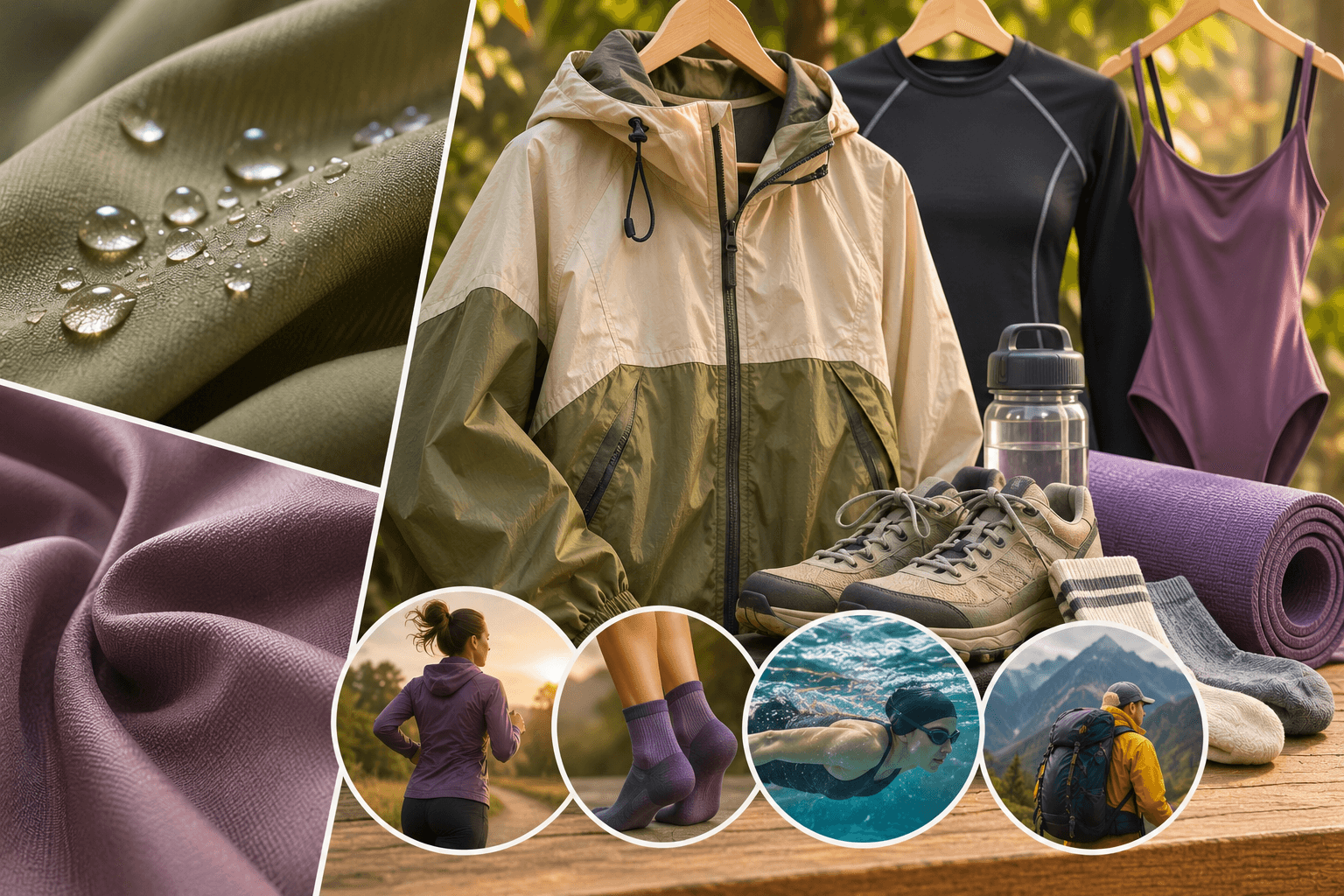
Because of its strength, abrasion resistance, and light weight, it is widely used in:
- Sportswear
- Socks
- Swimwear
- Outdoor clothing
- Technical garments
Once again:
The intended purpose helps determine the right material.
9. Elastane
Sometimes we see a label that says:
95% cotton, 5% elastane
Why not 100% cotton?
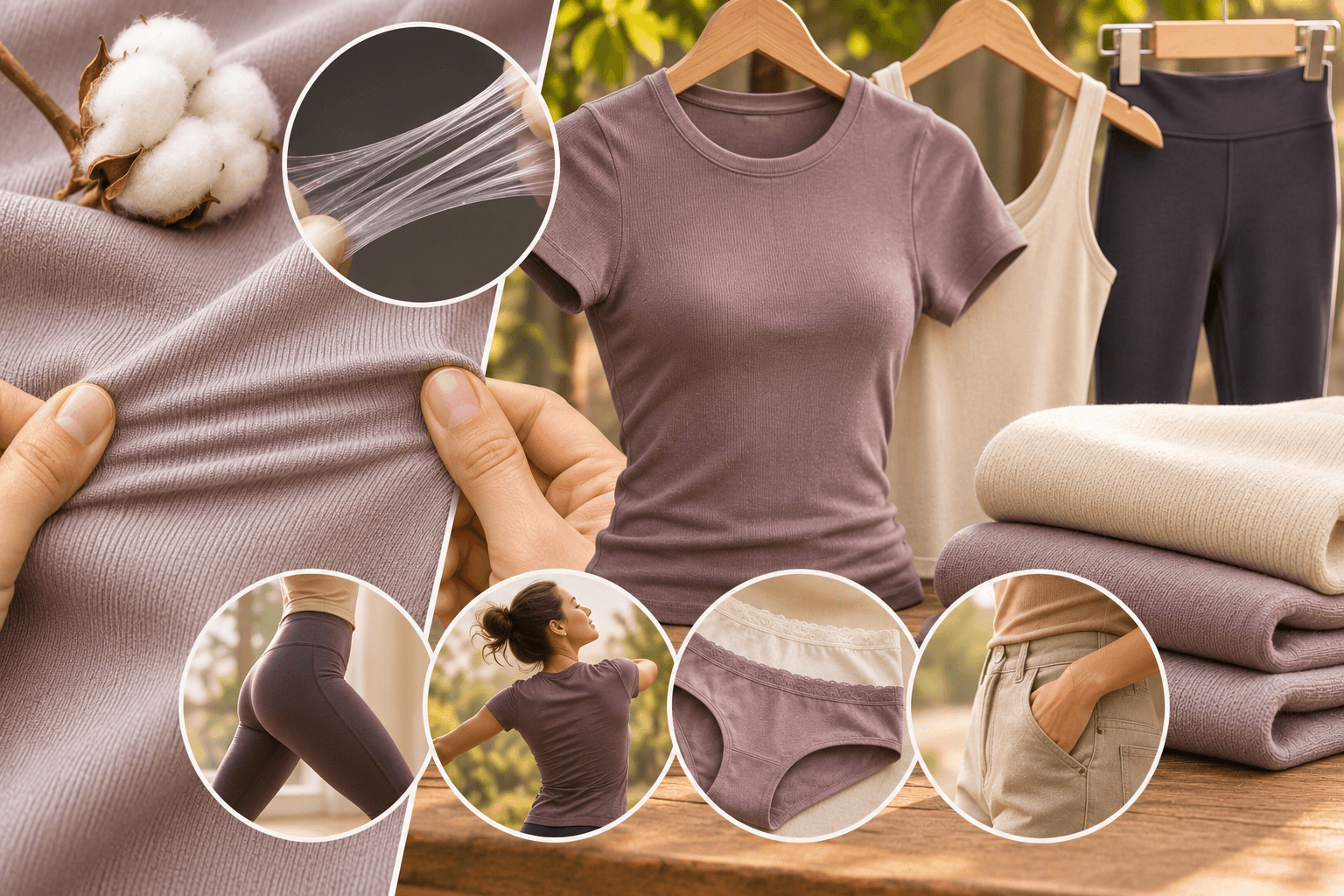
Because that small percentage of elastane can give the garment stretch and allow it to move more comfortably with the body.
There are practical reasons for using it in fitted trousers, leggings, close-fitting T-shirts, and underwear.
Sometimes a fabric blend is not a poor compromise but a better product design.
Should We Be Afraid of Fabric Blends?
No.
For example:
Cotton + elastane
Comfort + stretch.
Wool + synthetic fiber
Potential improvements in durability and care, depending on the construction.
Linen + viscose
Linen's distinctive texture + a more fluid drape.
However, blends also have another side: separating different fibers and recycling multi-component textiles into high-quality materials can be technically more complicated.
So once again, there is no universal answer.
Does “Natural” Always Mean “Eco-Friendly”?
No.
This is one of the most common misconceptions about materials.
Cotton comes from plants.
Wool comes from animals.
Polyester is generally made from fossil-based raw materials.
But we cannot determine a material's environmental and social impact solely by classifying it as natural or synthetic.
Many factors matter, including:
- Where the raw materials come from
- How they are grown or extracted
- Water and energy consumption
- Chemical processing
- Effects on soil and ecosystems
- Working conditions
- Animal welfare
- How long the garment will be used
- What happens at the end of its life
That is why material comparisons in the textile industry increasingly consider not only fiber types but also the production systems behind them.
So Which Materials Should We Choose?
If you were expecting a simple list of the “best materials,” the answer may be slightly disappointing:
There is no single best material for everyone or every garment.
But we can use a few practical guidelines when shopping.
How Would I Evaluate Fabric in a Store?
I would start by reading the label.
But I would not stop there.
1. What is the composition?
100% cotton?
A linen blend?
Polyester?
Viscose?
2. Is the material suitable for the garment's purpose?
Polyester serves one purpose in a sports shirt and another in a loose everyday summer shirt.
3. I would feel the fabric with my hands
Is it too thin?
Is it excessively stiff?
Does it feel pleasant against the skin?
Does it seem likely to lose its shape easily?
4. I would hold it up to the light
This can provide some indication of fabric density, especially when buying shirts and T-shirts.
However, thin fabric does not automatically mean poor quality. Some fabrics are intentionally designed to be lightweight.
5. I would gently squeeze and release it
To see how easily it wrinkles.
Wrinkling is normal for linen.
But for another garment, that characteristic might be impractical for you.
6. I would check the care label
Because buying a material is only the beginning.
We also have to live with it.
Sometimes the Best Material Is the One You Already Own
If we are discussing sustainability when choosing materials, focusing only on the fibers of new products is not enough.
Continuing to wear clothes we already own, as long as they remain in good condition, often reduces the need to purchase new garments.
So before asking:
“Is this material environmentally friendly?”
It may sometimes be more useful to ask:
“Do I actually need new clothes, and will I use this garment for a long time?”
Next Time You Read a Clothing Label...
Do not immediately try to classify the material as simply good or bad.
Ask yourself three questions:
What is this material?
Why was it used in this garment?
Is it suitable for how I intend to wear it?
A garment made from 100% cotton is not automatically good.
And a garment made from polyester is not automatically bad.
A good choice is one where the material suits the garment's purpose, its quality, our ability to care for it, and how long we expect to use it.
Because good clothing is not simply clothing that looks beautiful.
It is clothing that fits our lives and that we actually wear.
Madu — Little stories that begin with fabric.